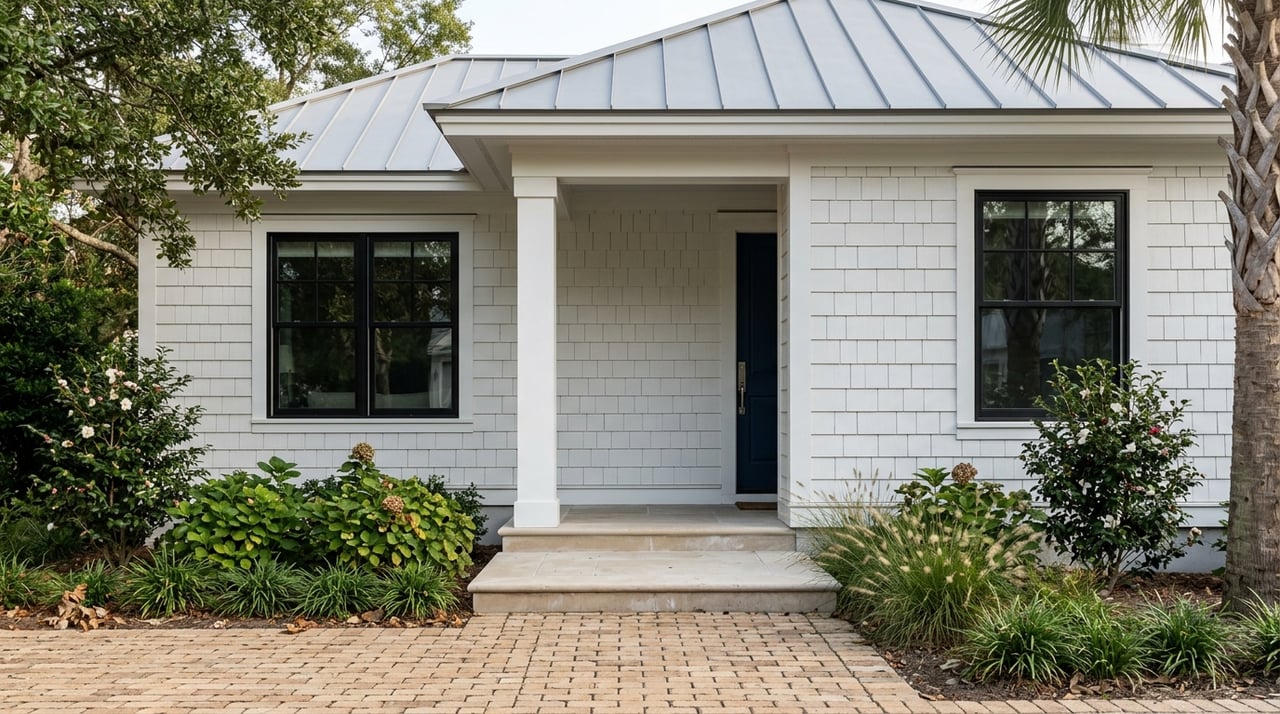
Wondering why one website says your Downtown Wilmington home is worth one number while another gives you a very different estimate? You are not alone. Online home valuations are easy to access, but they can feel confusing when your property has unique features, a historic setting, or updates that may not show up in the data. This guide explains how these tools work, why values can vary in Wilmington, and how to use them more wisely before you make a move. Let’s dive in.
What online home valuations really are
Online home valuations are usually automated valuation models, or AVMs. These are computer-generated estimates that rely on data instead of an in-person visit to your property.
According to the Federal Housing Finance Agency's AVM final rule, AVMs are computerized models used to estimate collateral value in mortgage-related settings. For you as a homeowner, the key takeaway is simple: an AVM is an estimate, not a formal appraisal.
That distinction matters. Even Zillow states that a Zestimate cannot replace a formal appraisal. So if you are looking at an online value for your home in Downtown Wilmington, it is best to treat it as a starting point rather than a final answer.
How valuation websites create estimates
Most online valuation tools pull from a mix of public records, recent sales data, and property details. They then compare your home to patterns in the broader market.
For example, Zillow says its Zestimate uses public records, MLS data, user-submitted data, home facts, location, and market trends. Zillow also notes that its median error rate is typically lower for homes that are currently on the market than for homes that are off-market, which suggests the estimate can be more accurate when fresh listing data is available.
Redfin explains that its estimate uses hundreds of data points tied to the market, the surrounding area, and the home itself. Its homeowner tool also lets owners update home facts and choose nearby comparable sales from a curated set, which can make the estimate feel more tailored. Even so, it is still a model-based estimate, not a walk-through valuation.
Why Wilmington estimates can vary
A big reason online estimates differ is that not all platforms measure the same thing. One site may show a modeled value index, while another highlights recent sold-price trends.
For instance, Zillow's Wilmington home values page listed the average home value in Wilmington at $408,845 as of February 28, 2026. By comparison, Redfin's Wilmington market page reported a median sale price of $442,500 in February 2026. Those figures are both useful, but they are not interchangeable because they come from different methods.
That gap is one reason you should be careful about applying citywide numbers to a specific home downtown. A broad market average may not reflect your block, your building style, or the condition of your property.
Why Downtown Wilmington is harder to price
Downtown Wilmington is not a cookie-cutter market. It includes properties with different ages, lot sizes, layouts, renovation histories, and in some cases, historic preservation considerations.
The City of Wilmington's historic district information notes that the Downtown Commercial Historic District Overlay includes a mix of late-19th- and early-20th-century buildings. It also explains that exterior changes inside local historic districts may require a Certificate of Appropriateness.
That matters because AVMs can miss details that have a real impact on value, such as:
- The quality of a renovation n- Whether updates match the home's architectural character
- Deferred maintenance not visible in public records
- Mixed-use or unusual property history
- Historic district rules that may shape future changes
In a neighborhood where homes and buildings can vary so much, two properties with similar square footage may still command very different prices.
What county data can tell you
If you want a stronger local reality check, New Hanover County provides tools that can help. These are especially useful when you want to compare an online valuation against official local data.
The county's Schedule of Values is its market-value appraisal guide. New Hanover County says the current schedule became effective January 1, 2025, and remains in effect until the next revaluation, which is scheduled for January 1, 2029.
That does not mean your county assessment is the same as market value today. It does mean the county has a structured process for aligning assessments with market conditions and property changes over time.
Use the county comparable sales tool
New Hanover County also offers a Comparable Sales Search tool for single-family homes and townhomes. The county says these sales were reviewed by an appraiser and are considered indicative of market value as of January 1, 2025.
The tool includes factors such as:
- Distance from the subject property
- Square footage
- Year built
- Story height
- Quality grade
- Condition
- Bedrooms and bathrooms
- Style
This local data can be very helpful because it reflects a more detailed approach than a simple price-per-square-foot guess. It can also generate a PDF, which may help with your own review.
Why assessed value and online value are not the same
Many homeowners compare an online estimate to their tax assessment, but those numbers serve different purposes. One is a consumer-facing estimate of market value, while the other is tied to local taxation.
For context, Wilmington's FY26 property tax rate is $28.25 per $100 of assessed value, and New Hanover County's FY25-26 rate is 30.6 cents per $100 of assessed value. Because taxes are connected to assessed value, it makes sense that homeowners want to know how close an online estimate is to the value used by local government.
Still, assessed value and likely sale price can move on different timelines. That is why an online estimate might feel high or low compared to your tax bill.
When an online estimate is most useful
Online home valuations can be very helpful when you use them the right way. They are great for getting a quick ballpark figure and spotting general market movement.
They can be especially useful if you are:
- Thinking about selling in the next 6 to 12 months
- Tracking your home's value over time
- Comparing your property to a broader Wilmington trend
- Starting an early conversation about timing or prep
In those situations, an AVM gives you a fast first look. It just should not be the only number you rely on.
When a local CMA adds real value
A comparative market analysis, or CMA, brings in the human judgment that online tools cannot fully replicate. This is where a local agent can evaluate how your property fits into the current market in a more practical way.
The National Association of Realtors consumer guide on pricing a home says agents consider factors such as size, location, amenities, condition, market conditions, upgrades, repairs, buyer preferences, and the seller's timeline. It also defines comps as similar properties that recently sold, are under contract, or are active in the same market area.
That kind of analysis matters in Downtown Wilmington. A local review can help account for factors like renovation quality, historic district context, and whether recent improvements are actually reflected in public records.
A smart way to evaluate your home value
If you want the clearest picture of your home's likely value, use a layered approach instead of trusting one number. Start broad, then narrow in.
A practical process looks like this:
- Check an online valuation to get a quick estimate.
- Review county records and the county comparable sales tool.
- Compare your home's condition, updates, and setting to recent nearby sales.
- Ask for a local CMA to test whether the AVM seems too high, too low, or reasonably close.
- Discuss timing, prep, and likely buyer response before setting expectations.
This approach gives you both speed and context. In a market like Downtown Wilmington, that combination is usually much more reliable than a standalone online estimate.
The bottom line for Wilmington homeowners
Online home valuations are useful, but they work best as a starting point. In Downtown Wilmington, where historic character, renovation quality, and block-by-block differences can shape value, a computer model may miss important details.
If you want to understand what your home may be worth in today's market, pair the convenience of an AVM with a local comparative market analysis and a strategy conversation. That way, you can make decisions based on more than a generic algorithm. When you are ready for a more informed look at your home's value, connect with Joel Sheesley for local guidance tailored to your property and your goals.
FAQs
How accurate are online home valuations in Downtown Wilmington?
- Online home valuations can provide a useful estimate, but accuracy can vary, especially in Downtown Wilmington where historic districts, renovation quality, and property-specific details may not be fully captured by an automated model.
What is the difference between an online home valuation and an appraisal in Wilmington?
- An online home valuation is a computer-generated estimate based on available data, while an appraisal is a formal opinion of value completed by a licensed appraiser after a more detailed review.
How can New Hanover County data help me check my home's value?
- New Hanover County offers a Schedule of Values and a Comparable Sales Search tool that can help you review assessed value methods and appraiser-reviewed comparable sales for single-family homes and townhomes.
Why do Zillow and other websites show different home values in Wilmington?
- Different websites use different data sources and formulas, so one platform may show a modeled value while another reports recent sold-price trends, which can lead to different numbers.
Should I trust an online home valuation before selling my Wilmington home?
- You can use an online valuation as a starting point, but it is smarter to compare it with local sales data and a professional CMA so you have a more complete view before pricing your home.