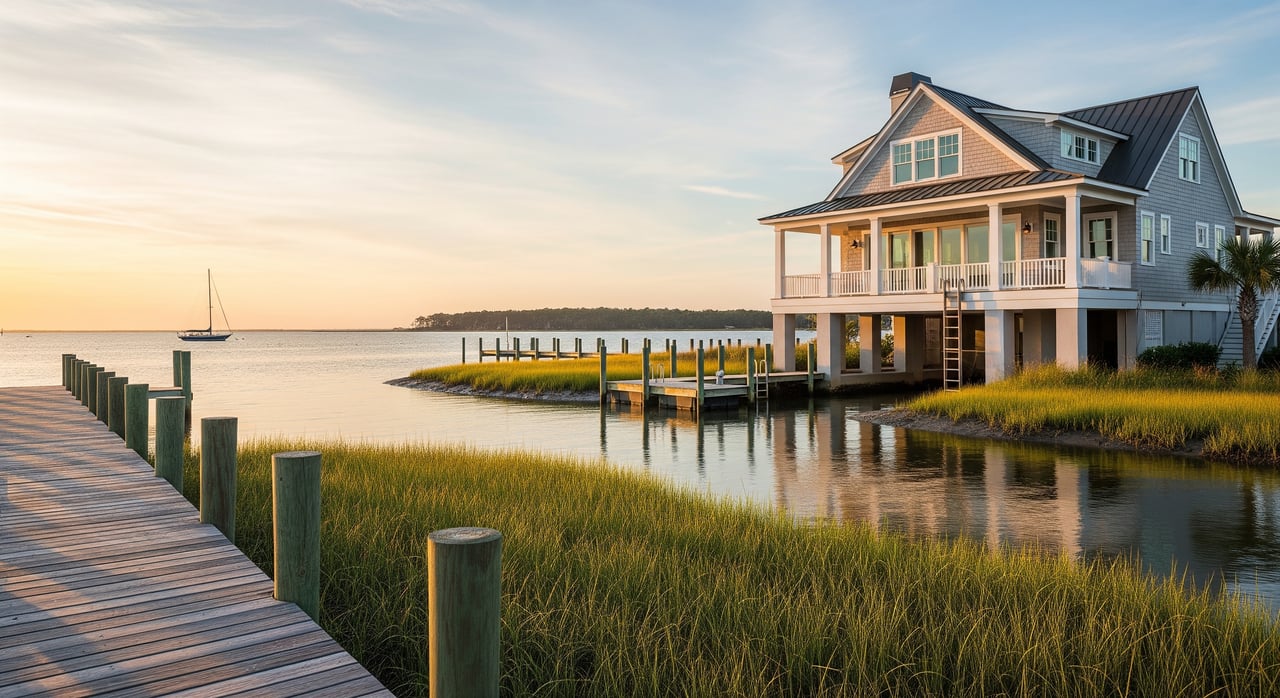
Ever picture yourself stepping onto a dock at sunrise, coffee in hand, with the Masonboro Sound waking up around you? If you are weighing a move or a second home near the water, the choices can feel confusing. You want the right mix of views, access, maintenance, and cost. This guide breaks down your options in Masonboro Sound, what they mean for your boating and lifestyle goals, and how to shop smart with fewer surprises. Let’s dive in.
Masonboro waterfront options
True waterfront frontage
What it is: Your lot directly touches tidal water at the mean high‑water line. In Masonboro, this includes open sound or estuary frontage, tidal creeks, marsh edges, and some developed channels.
How it lives:
- Open sound or main channels offer wide views, more wind and chop, and often deeper water near shore for larger boats.
- Creek or tributary frontage is more sheltered with narrower views, good for smaller boats and paddlecraft, but can get shallow at low tide.
- Marsh edge frontage brings privacy and wildlife viewing, though water is often shallow and direct boat access can be limited without a dock or dredging.
- Canal or modified channels, where present, may support docks with maintained depths.
What to expect: Highest purchase premiums, strong privacy and access, and more maintenance and permitting for docks, bulkheads, and erosion control.
Water‑view homes
What it is: You see the sound or a tidal creek, but your lot does not touch the water. Access may require crossing a road, using an easement, or going through HOA space.
How it lives: Elevated homes with long marsh or estuary views are common. You get views with fewer shoreline obligations.
What to expect: Lower price than true waterfront and fewer maintenance demands, but private dock options are limited and conservation buffers may restrict new structures.
Deeded slips and marina access
What it is: A titled or contractual right to use a boat slip at a community dock or private marina. Some slips are deeded to a lot, others are leased or licensed.
How it lives: You gain reliable deep‑water access without owning waterfront. Rules vary on slip size, transfer rights, and liveaboard use.
What to expect: Midrange cost profile with HOA or marina fees and potential waitlists. Verify whether the slip is deeded or a revocable agreement.
Shared docks, community ramps, and public access
What it is: Community docks, ramps, or launches managed by an HOA or available to the public at area parks.
How it lives: Lower acquisition cost with flexible access to recreation around Masonboro Island and nearby waters.
What to expect: Access depends on HOA rules, ramp congestion, and tides or dredging conditions. Plan for busy seasons.
Boat access, tides, and exposure
Water depth and tides
In Masonboro Sound, tides shape daily access. Open water and main channels often support larger powerboats. Creeks and marsh edges typically suit shallow‑draft boats, skiffs, and paddlecraft. Confirm depths with charts, local marina input, and on‑site checks, and ask about shoaling or dredging history.
Exposure and marine conditions
Open sound frontage means bigger views and quicker access to open water, with more wind and chop. Sheltered creeks feel calmer and are ideal for fishing and kayaking. Expect more vegetation and wildlife in marsh settings and plan for seasonal insects.
Shoreline type and upkeep
Natural marsh edges look and function well as habitat, but they can limit new docks or alterations. Bulkheads and seawalls protect uplands, require periodic repair, and usually need permits. Private docks and lifts add convenience and ongoing maintenance costs.
Flood, insurance, and risk
Waterfront and near‑water properties here face storm surge and flood exposure. Many parcels fall into FEMA flood zones that can trigger lender requirements for flood insurance. Obtain an elevation certificate to help price coverage. Coastal homes may also need separate wind or hurricane policies, sometimes with higher deductibles. Ask about potential sea‑level rise and map changes that could affect future insurability and resale.
Pricing and lifestyle trade‑offs
What drives price
- Highest premiums: Direct open‑water frontage with deep‑water docks and unobstructed views.
- Midrange: Deeded slips, community docks, or creek frontage with usable access.
- Lower premiums: Water‑view lots, marsh‑edge lots without a dock, or homes relying on HOA or public launches.
- Other factors: Lot and house elevation, engineered foundations, public utilities, HOA fees, neighborhood amenities, and the supply of true waterfront inventory.
Matching your lifestyle
- Boating focus: If you run a larger boat, prioritize open‑water or deep‑water frontage or a deeded deep‑water slip. Confirm channel depth and turning room.
- Low‑maintenance: If views matter most, consider water‑view homes or properties with community docks to avoid dock upkeep.
- Nature and privacy: Creek and marsh settings feel quieter with great wildlife viewing, but they can limit big‑boat access and may bring more insects.
- Seasonal activity: Homes near popular access points can see busier traffic during peak recreation times.
Masonboro vs nearby coast options
Masonboro Sound vs oceanfront beaches
Masonboro Sound living centers on estuary and sound views, tidal creeks, and a more sheltered setting. Oceanfront alternatives offer direct beach access and Atlantic exposure with different wind and wave profiles and insurance considerations.
Masonboro vs inland coastal subdivisions
Some inland communities offer canal systems or shared marinas to trade lower lot cost for HOA rules and potential dredging needs. Weigh slip availability, fees, and long‑term maintenance plans.
How to search smarter
MLS filters and mapping
Use precise terms: “waterfront,” “water view,” “dock,” “deeded slip,” “community dock,” “bulkhead,” “seawall,” “riparian,” “marshfront,” and “canal.” Overlay parcel maps, FEMA flood zones, and tide or depth data to confirm true adjacency to mean high water. Note vertical elevation and foundation type for insurance planning.
Key questions for the seller
- Does the property include deeded riparian rights or a dock slip? Is it privately owned, deeded, leased, or shared?
- Any easements, HOA rules, or agreements that affect dock use or shoreline access?
- Recent surveys, permits, or elevation certificates on file?
- When were bulkhead, seawall, or dock last inspected or repaired? Any encroachments or violations?
- Typical low‑tide depth at the dock and along the channel. Any shoaling history?
- Which flood zone and what are recent insurance premiums and deductibles?
Due‑diligence checklist
- A recent survey marking the Mean High Water line, corners, and easements.
- Copies of permits for docks, bulkheads, dredging, or other shoreline work.
- Elevation certificate and flood insurance history.
- HOA or marina documents covering slip ownership, fees, assessments, transfer rules, and use restrictions.
- Local tide or chart data, or a marine surveyor’s depth check to verify approach and channel.
Local resources to consult
- New Hanover County for property records, permits, and GIS mapping.
- FEMA for Flood Insurance Rate Maps and the National Flood Hazard Layer.
- North Carolina Division of Coastal Management for coastal permits and shoreline rules.
- U.S. Army Corps of Engineers for work in navigable waters.
- NOAA charts and tide tables for navigation and depth planning.
- Local marinas, harbormaster, or marine surveyors for practical channel and dredging insights.
- NC Sea Grant or academic sources for erosion, marsh dynamics, and sea‑level trends.
Ready to explore Masonboro Sound?
Whether you want a deep‑water dock for a larger boat, a quiet marsh view with low maintenance, or a deeded slip that keeps costs in check, you have strong options in Masonboro Sound. With thoughtful due diligence, you can balance views, access, insurance, and long‑term value. For local guidance, a tailored search, and negotiation that protects your interests, connect with Joel Sheesley.
FAQs
What does “waterfront” mean in Masonboro Sound?
- It means your lot touches tidal water at the mean high‑water line, but you still must verify riparian rights and whether a dock or slip is included.
Can I dock a larger boat in Masonboro Sound?
- Often yes near open water or main channels, but you should confirm channel depth, dock setup, and any size rules from a marina or HOA.
How do tides affect daily boating access?
- Tides can limit navigation in creeks and marsh edges, so check typical low‑tide depths and any shoaling or dredging history before you buy.
What ongoing costs should I plan for near the water?
- Budget for dock or bulkhead maintenance, possible dredging, HOA or marina fees, flood and wind insurance, and storm‑related repairs over time.
Are there permits for docks and shoreline work in North Carolina?
- Yes. Expect state coastal permits, and possibly federal and county approvals, for docks, lifts, bulkheads, and shoreline stabilization.
How does flood insurance work for Masonboro properties?
- Lenders usually require flood insurance in high‑risk FEMA zones, with premiums based on elevation, zone, and structure details. Get an elevation certificate and early quotes.